
Asian cuisine is celebrated worldwide for its bold flavors, diversity, and artistry—but behind every beloved dish lies a deeper cultural story. In many Asian societies, food is more than nourishment; it is a language of tradition, symbolism, and connection.
From celebratory feasts to everyday meals, popular Asian dishes reflect centuries of history, beliefs, and communal values passed down through generations.
Food as Cultural Identity in Asia
Across Asia, cooking is closely tied to identity. Recipes are inherited, rituals are preserved, and meals often mark life’s most important moments.
Food represents:
- Family heritage
- Social harmony
- Spiritual beliefs
- Respect for nature and seasons
Each dish tells a story about where people come from—and what they value.
Rice: The Foundation of Life
Rice is a staple across much of Asia and symbolizes life, prosperity, and sustenance.
In cultures such as China, Japan, Korea, and Southeast Asia:
- Rice is central to daily meals
- Sharing rice signifies unity and trust
- Wasting rice is often considered disrespectful
Its presence reflects gratitude for abundance and agricultural tradition.
Noodles: Longevity and Continuity
Noodles carry powerful symbolism, especially in East Asian cultures. Long, unbroken noodles represent:
- Long life
- Endurance
- Good fortune
That’s why noodle dishes are commonly served during birthdays and New Year celebrations, with care taken not to cut them short.
Dumplings: Wealth and Togetherness
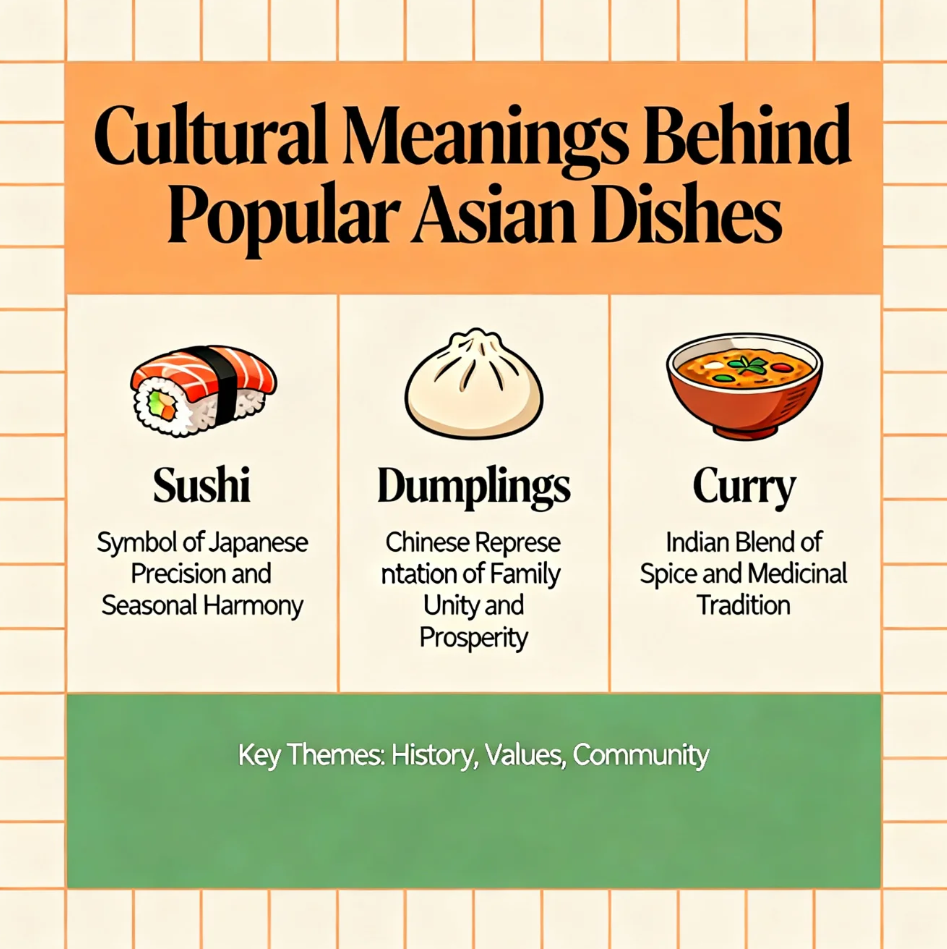
Dumplings, popular in China and beyond, resemble ancient currency shapes—making them symbols of wealth and prosperity.
Their preparation is often communal:
- Families gather to fold dumplings together
- The act reinforces unity and cooperation
- Shared meals strengthen social bonds
Food becomes a collective experience rather than an individual one.
Curry: History, Trade & Regional Identity
Curries across South and Southeast Asia reflect centuries of cultural exchange through trade, migration, and colonization.
Each region’s curry tells a different story:
- Indian curries emphasize spices and balance
- Thai curries highlight herbs and freshness
- Japanese curry reflects adaptation and comfort
These dishes showcase how cultures evolve while preserving identity.
Fermented Foods: Patience and Balance
Fermented dishes like kimchi, miso, and fish sauce symbolize patience, transformation, and respect for natural processes.
They reflect:
- Seasonal preparation
- Preservation techniques
- Harmony between humans and nature
Fermentation embodies the belief that time and care create depth—both in flavor and life.
Street Food: Community and Everyday Culture
Street food across Asia represents accessibility, creativity, and social connection.
From night markets to roadside stalls:
- Food is affordable and shared
- Eating is social, not isolated
- Culinary traditions stay alive through daily practice
Street food captures the heartbeat of local culture.
Celebration Dishes & Symbolism
Certain dishes are tied to festivals and rituals:
- Mooncakes symbolize unity during Mid-Autumn Festival
- Sweet rice cakes represent progress and growth
- Whole fish signifies abundance and completion
These symbolic foods transform meals into meaningful ceremonies.
Why These Meanings Still Matter
In a globalized world, traditional food meanings help preserve cultural identity. They remind communities of shared values and offer younger generations a tangible connection to their roots.
Understanding these meanings deepens appreciation—not just of the flavors, but of the people behind them.
Final Thoughts
Popular Asian dishes endure not only because they taste good, but because they carry meaning. They represent history, family, spirituality, and collective memory—served on a plate.
To eat these dishes is to participate in a story centuries in the making.