
Asian cuisine is one of the most diverse and flavorful culinary traditions in the world. From the spicy curries of Thailand to the delicate sushi of Japan, the bold stir-fries of China to the comforting soups of Vietnam, each dish carries a story of history, culture, and unique flavor combinations.
For beginners, the world of Asian food can feel overwhelming—but it doesn’t have to be. This guide introduces the essential ingredients, cooking methods, and flavor profiles that form the backbone of Asian cuisine, helping you start your flavorful journey with confidence.
🥢 1. The Foundations of Asian Flavors
At the heart of Asian cooking are five key taste elements that create balance:
- Sweet – from palm sugar, hoisin sauce, or mirin
- Salty – soy sauce, fish sauce, or miso
- Sour – lime, vinegar, or tamarind
- Spicy – chili paste, fresh peppers, or wasabi
- Umami (savory) – mushrooms, seaweed, or fermented sauces
Asian dishes often combine these elements in harmony, creating flavors that are bold yet balanced.
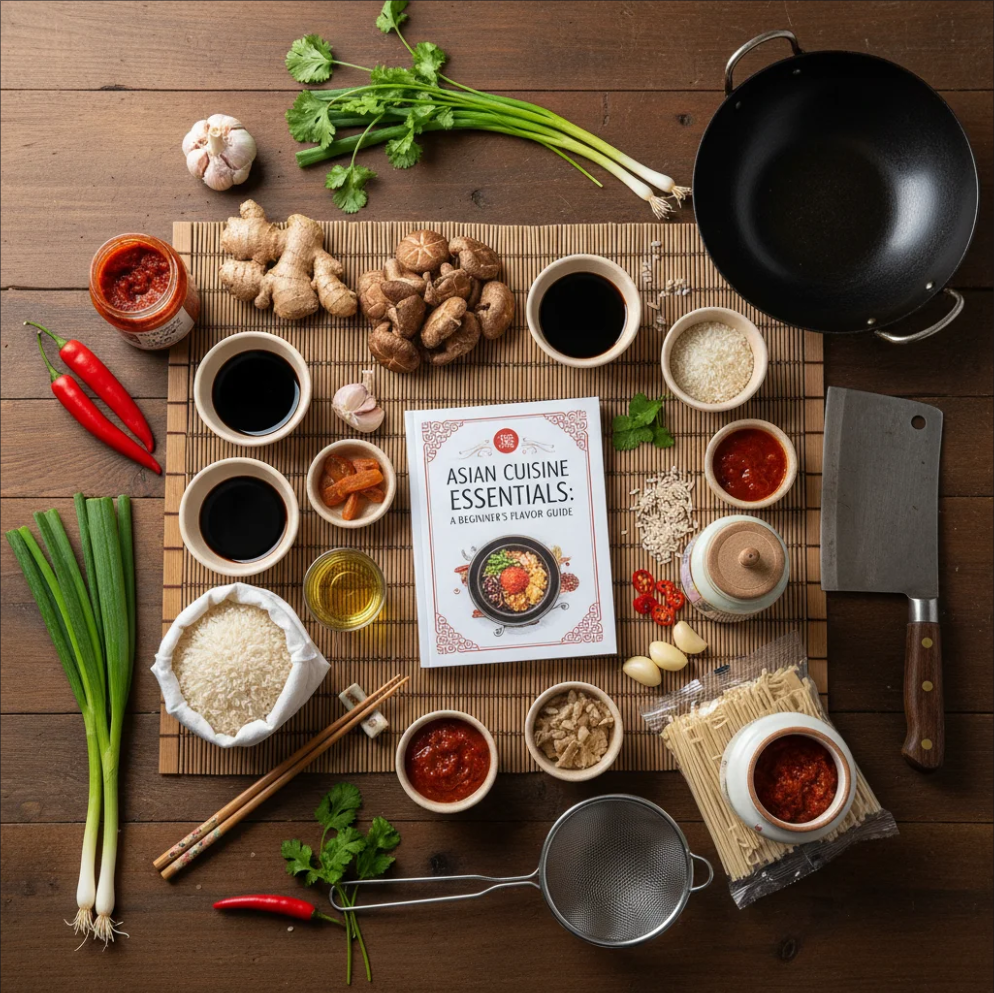
🧄 2. Essential Ingredients to Stock Your Pantry
To recreate authentic Asian flavors, these staples are a must-have:
- Soy Sauce & Fish Sauce – salty bases for marinades, stir-fries, and dipping sauces
- Rice & Noodles – from jasmine rice to ramen and rice vermicelli
- Spices & Herbs – ginger, garlic, lemongrass, star anise, and chili
- Coconut Milk – a creamy base for Southeast Asian curries
- Sesame Oil – adds nutty aroma and depth
- Miso & Fermented Pastes – umami powerhouses for soups and broths
🔥 3. Common Cooking Techniques
Asian cuisine is defined by unique cooking methods that bring out the best in fresh ingredients:
- Stir-Frying – fast and high-heat, keeping vegetables crisp and flavors intense
- Steaming – from dumplings to fish, preserving nutrition and subtle flavors
- Simmering & Broths – essential for ramen, pho, and hotpots
- Grilling & Skewers – yakitori, satay, and Korean BBQ
🍲 4. Must-Try Beginner Dishes
If you’re just starting out, here are some approachable dishes to explore:
- Pad Thai (Thailand) – sweet, tangy, and nutty stir-fried noodles
- Miso Soup (Japan) – light, comforting, and umami-rich
- Fried Rice (China) – versatile and customizable with simple ingredients
- Pho (Vietnam) – fragrant broth with rice noodles and herbs
- Chicken Satay (Indonesia/Malaysia) – skewered and grilled with peanut sauce
🌏 5. Tips for Exploring Asian Cuisine
- Start simple: master a few pantry staples before diving into complex recipes.
- Visit local Asian markets for authentic ingredients.
- Experiment with flavors—don’t be afraid to mix sweet, spicy, and sour.
- Learn the culture: food is deeply tied to tradition, family, and celebration.
✨ Final Thought: Asian cuisine is more than just food—it’s an experience of flavors, traditions, and artistry. With the right ingredients and an open mind, anyone can start their journey into this flavorful world.