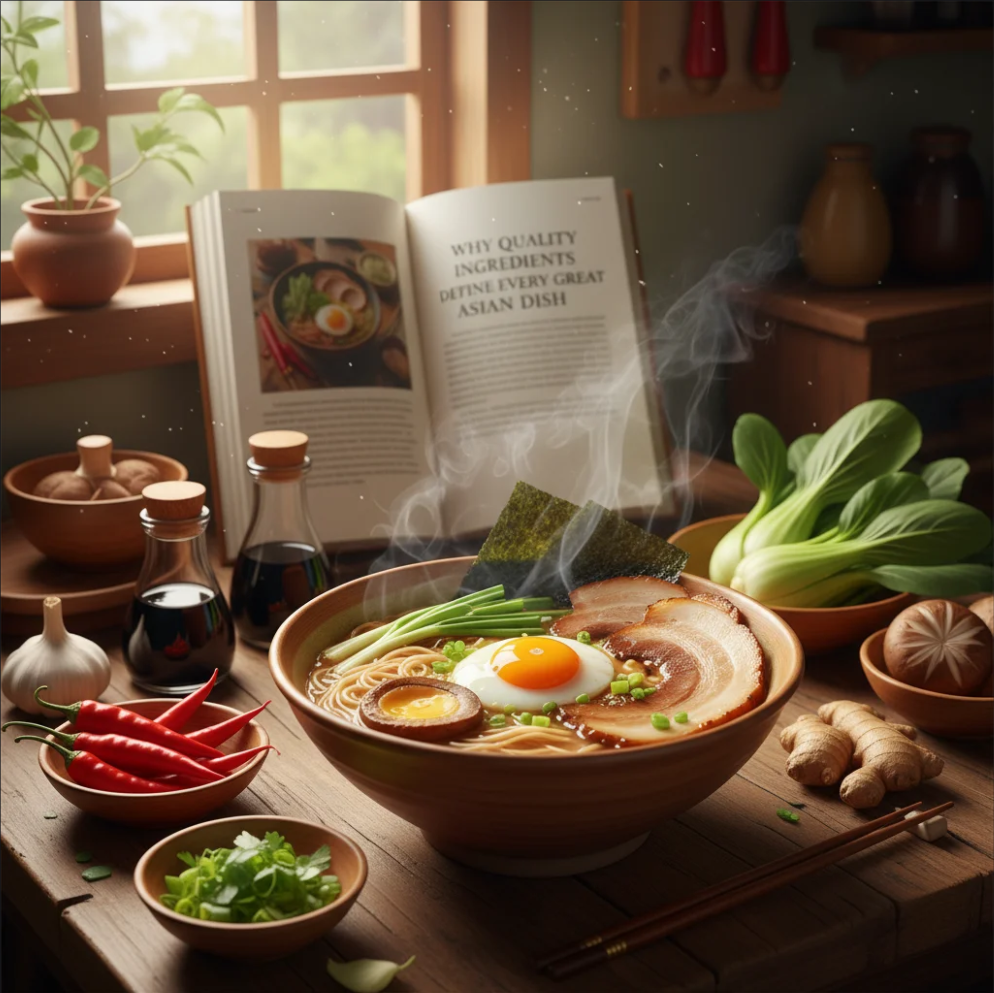
Why Quality Ingredients Define Every Great Asian Dish
From the aromatic herbs of Thailand to the delicate balance of flavors in Japan, one truth runs through every Asian kitchen — the secret to unforgettable taste lies in the ingredients.
Asian cuisine isn’t just about technique or presentation; it’s about respecting every element that goes into the dish. Whether it’s handpicked spices, freshly caught seafood, or locally grown vegetables, quality is what transforms a simple meal into a culinary masterpiece.
🥢 1. The Heart of Asian Cooking: Freshness Above All
In most Asian kitchens, chefs shop daily — not weekly. The reason? Freshness defines flavor.
- In Vietnam, herbs like basil, mint, and cilantro are added seconds before serving to preserve aroma.
- In Japan, sushi chefs select fish that meet exacting freshness standards — anything less is unthinkable.
- And in Thailand, market-sourced lemongrass and galangal create the vibrant backbone of tom yum soup.
✅ Lesson: Fresh ingredients don’t just taste better; they capture the soul of the culture.
🌾 2. Authentic Sourcing Keeps Tradition Alive
Many of Asia’s most iconic dishes rely on ingredients that carry centuries of history. Using authentic sources isn’t about elitism — it’s about protecting heritage.
For instance:
- Soy sauce brewed traditionally over months offers complex umami that instant alternatives can’t replicate.
- Jasmine rice from Thailand or short-grain rice from Japan delivers textures essential to their cuisines.
- Even the salt matters — some chefs swear by sea salt from coastal regions for its natural balance.
✅ Lesson: The closer the source to tradition, the truer the flavor.
🌶️ 3. Balancing the Five Elements of Flavor
Asian cuisine is built on balance — sweet, salty, sour, bitter, and umami. High-quality ingredients help maintain that harmony without over-reliance on artificial enhancers.
- Natural fish sauce brings depth to Vietnamese pho.
- Aged miso adds complexity to Japanese soups.
- Pure sesame oil elevates a simple stir-fry into a signature dish.
✅ Lesson: When ingredients are genuine, balance happens naturally.
🍚 4. The Modern Revival: Chefs Returning to the Roots
As Asian cuisine goes global, many modern chefs are leading a back-to-basics movement — focusing again on where their ingredients come from.
From farm-to-table initiatives in Seoul to small-batch soy sauce makers in Kyoto, the trend is clear: quality equals authenticity. Diners can taste the difference, and they’re willing to pay for it.
✅ Lesson: Innovation in Asian cooking begins by honoring its origins.
🧭 Conclusion: Great Taste Starts with Great Ingredients
Every great Asian dish — from a comforting bowl of ramen to a spicy Malaysian laksa — carries a story written through its ingredients.
The next time you enjoy your favorite Asian meal, remember: behind every perfect bite lies the care, craft, and respect for quality that define this timeless cuisine.
