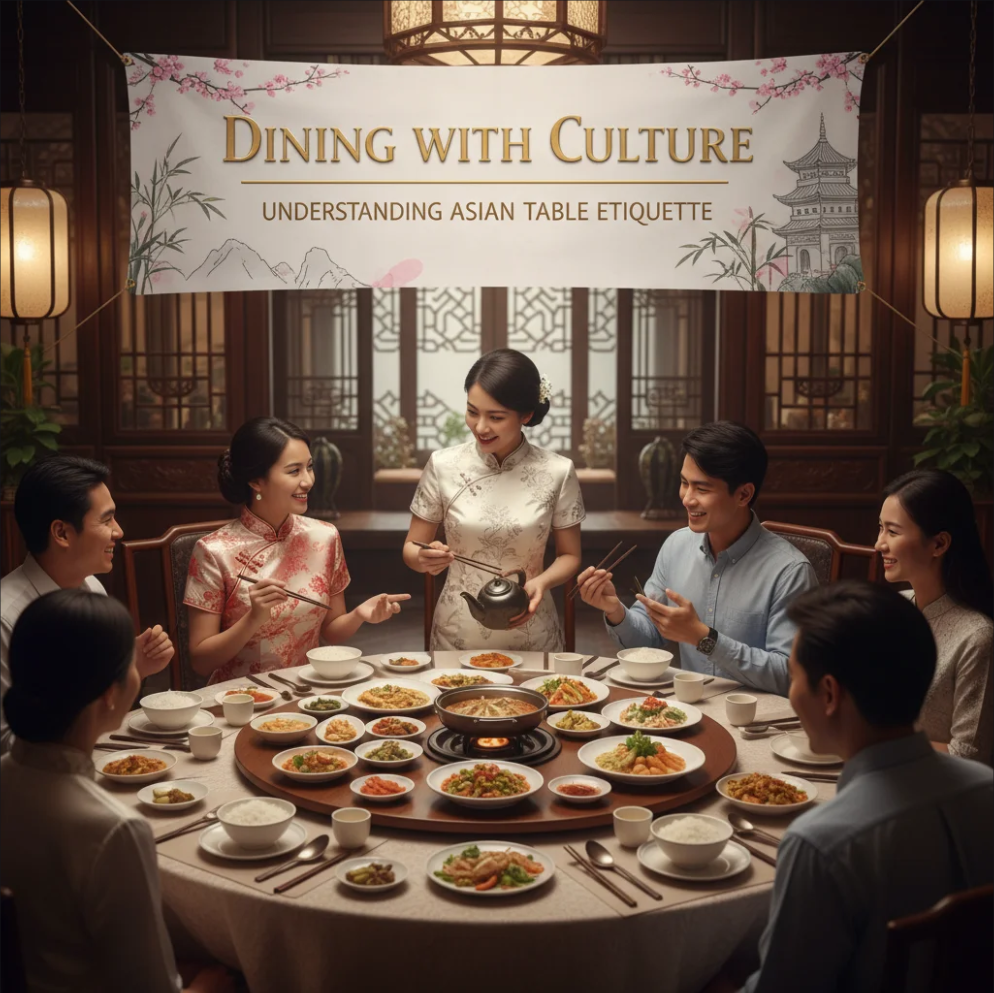
Dining with Culture: Understanding Asian Table Etiquette
Food is more than just sustenance—it’s a reflection of culture, tradition, and values. In Asia, dining goes far beyond eating; it is a social ritual, a sign of respect, and a symbol of harmony. Understanding Asian table etiquette not only enriches your culinary experiences but also shows appreciation for the deep cultural roots behind every meal. Whether you’re traveling across Asia or dining at an authentic restaurant in your hometown, knowing the dos and don’ts at the table can make all the difference.
🌏 Why Table Etiquette Matters in Asia
In many Asian countries, meals are a communal experience meant to bring people together. Manners at the table often reflect your character and upbringing. From chopstick placement in Japan to sharing dishes in China, each region has its own rules and meanings tied to food traditions.
Respecting these practices goes beyond politeness—it demonstrates cultural understanding and builds stronger connections.
🍜 Key Table Etiquette Across Asian Cultures
1. China: Sharing is Caring
- Meals are usually served family-style, with multiple dishes shared among everyone.
- Never stick chopsticks upright in rice—it resembles funeral rituals.
- Always let elders start eating first as a sign of respect.
2. Japan: Precision and Politeness
- Slurping noodles is not rude—it shows appreciation for the food.
- Don’t pass food chopstick-to-chopstick, as it resembles funeral customs.
- Bow slightly before beginning a meal and say “Itadakimasu” (I humbly receive).
3. Korea: Respect for Hierarchy
- The eldest person at the table begins eating first.
- Don’t lift your rice bowl like in China or Japan—keep it on the table.
- Use both hands when pouring drinks for others, especially elders.
4. Thailand: The Art of the Spoon
- The spoon is the main utensil; the fork is used only to push food onto it.
- Avoid putting the fork directly into your mouth.
- Showing gratitude to the cook or host is considered polite.
5. India: Eating with Hands
- Traditionally, meals are eaten with the right hand only—the left is considered unclean.
- Wash hands thoroughly before and after dining.
- Sharing food is a common gesture of hospitality and bonding.
🎎 Cultural Significance of Dining Etiquette
Asian dining etiquette is deeply tied to respect, community, and tradition:
- Respect for elders is seen in waiting for them to begin first.
- Communal eating reflects harmony and equality.
- Rituals and phrases of gratitude honor not only the cook but also nature and food itself.
🌟 Tips for Travelers and Food Lovers
- Observe others at the table before starting.
- When unsure, politely ask about local customs.
- Show appreciation with phrases like “Thank you,” “Xie Xie” (China), “Arigato” (Japan), or “Khob Khun Krub/Ka” (Thailand).
Conclusion
Dining in Asia is more than just enjoying rich flavors—it’s about embracing traditions that have been passed down for centuries. By understanding and respecting Asian table etiquette, you can connect more deeply with the culture, show respect to your hosts, and fully immerse yourself in the dining experience.
So, the next time you sit down for an Asian meal, remember: every gesture at the table tells a story.
