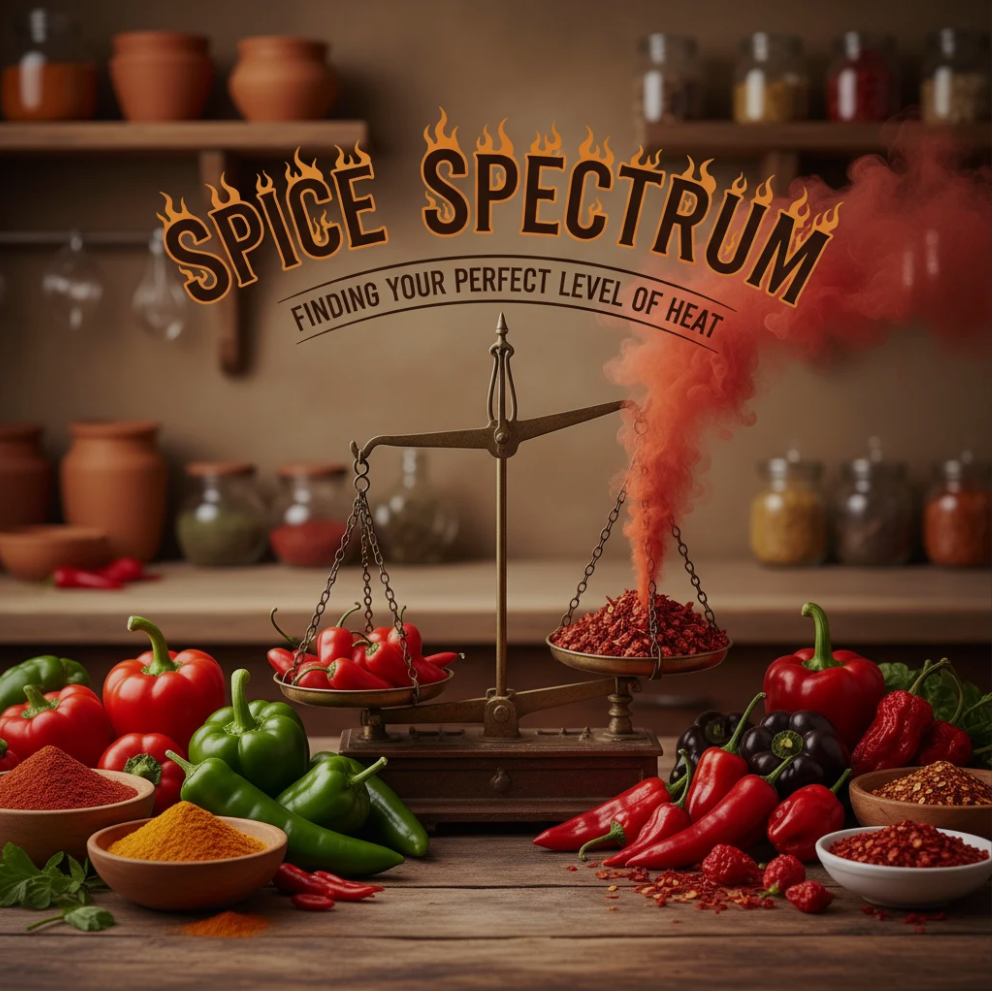

For some, spice is an adventure; for others, it’s a dare. But for most of us, it’s about balance — that perfect level of heat where flavor meets fire.
Understanding the spice spectrum can help you find your comfort zone in the world of chili, curry, and global cuisine — without tears, regrets, or a glass of milk on standby.
🔥 1. What Exactly Is the Spice Spectrum?
The “spice spectrum” refers to the range of heat levels found in foods, particularly those seasoned with chili peppers.
Scientists measure it using the Scoville Heat Unit (SHU) scale — the higher the number, the hotter the pepper.
- Mild: 100–2,500 SHU (e.g., bell peppers, banana peppers)
- Medium: 2,500–30,000 SHU (e.g., jalapeños, serranos)
- Hot: 30,000–100,000 SHU (e.g., cayenne, Thai chili)
- Extreme: 100,000+ SHU (e.g., habanero, ghost pepper, Carolina Reaper)
Knowing this helps you control not only spice level, but also flavor depth — because heat can either highlight or overpower the ingredients you use.
🌿 2. The Science Behind the Burn
The fiery sensation in spicy food comes from capsaicin, a natural compound in chili peppers.
Capsaicin binds to the pain receptors in your mouth — the same ones that detect heat — which is why your brain thinks your tongue is on fire, even when it isn’t.
Interestingly, the body responds by releasing endorphins, the “feel-good” hormones.
That’s why many people say spicy food is addictive — it’s literally a rush of pleasure and pain combined.
🥘 3. How to Find Your Perfect Level of Heat
Everyone’s spice tolerance is different. The key is to build it gradually:
- Start mild – Begin with peppers like poblano or Anaheim.
- Add spice strategically – Mix chili oil, flakes, or sauces instead of pouring them on.
- Balance the burn – Use dairy, coconut milk, or lime juice to soften intensity.
- Experiment with cuisines – Indian curries, Mexican salsas, and Thai stir-fries each showcase unique spice styles.
Tip: Keep a flavor journal! Note which dishes give you that just-right tingle and which ones feel like a fire drill.
🧄 4. Flavor Beyond the Fire
Heat isn’t everything. True spice mastery lies in flavor layering — understanding how chili interacts with herbs, aromatics, and acidity.
For example:
- Smoky heat from chipotle pairs perfectly with tomato-based sauces.
- Bright heat from fresh jalapeño complements lime, cilantro, and avocado.
- Deep heat from dried chili adds earthy tones to stews and braises.
Finding your spice spectrum means learning which heat profiles enhance your favorite foods instead of overwhelming them.
🧊 5. Cooling the Flame (Without Losing the Fun)
Overdid it? Don’t reach for water — it only spreads the burn. Instead, try:
- Milk or yogurt — the fat breaks down capsaicin.
- Bread or rice — they absorb some of the oils.
- Sugar or honey — sweetness balances sharp spice.
Remember, heat should elevate your experience, not dominate it. The goal is to find your level of pleasure, not pain.
🌶️ Conclusion: Your Spice Journey Starts Here
The spice spectrum is personal — it’s about curiosity, culture, and comfort. Whether you love a gentle warmth or a daring inferno, each level tells a story about your taste and tolerance.
So go ahead — explore the fire, respect the flame, and celebrate flavor. Your perfect heat is waiting to be discovered.