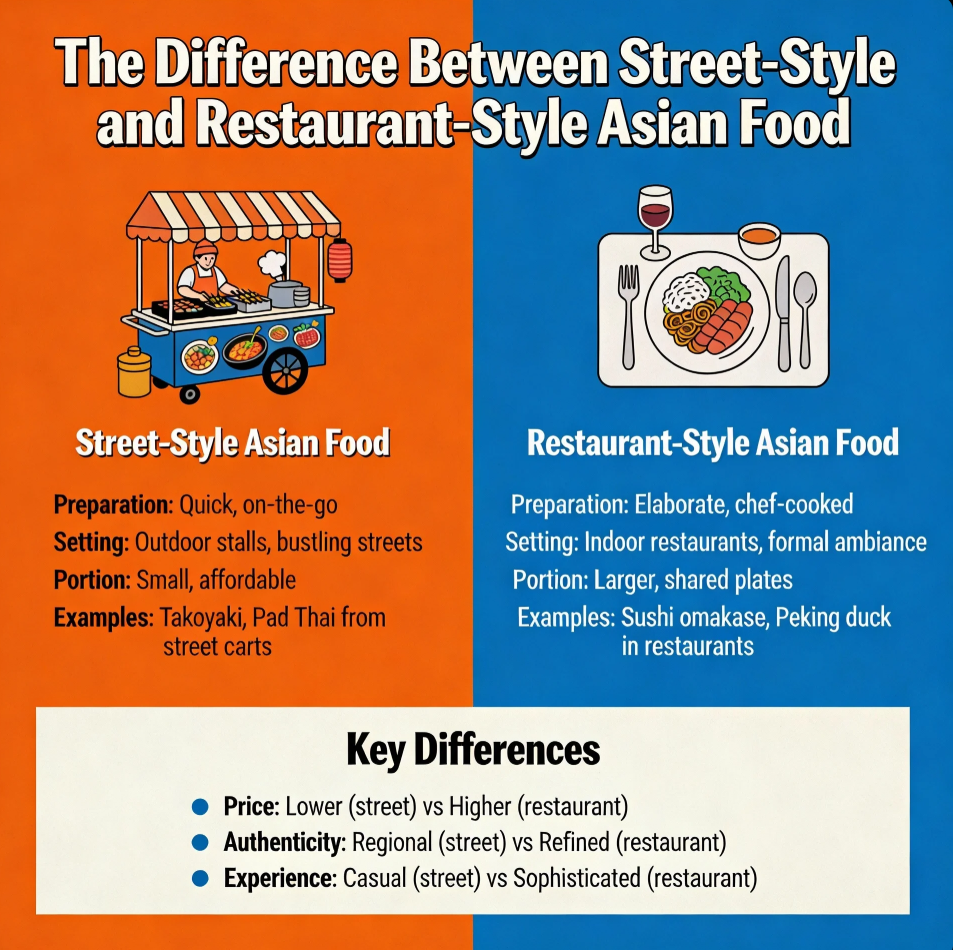

Asian cuisine is celebrated for its diversity, depth, and bold flavors—but not all Asian food experiences are the same. One of the most fascinating contrasts is between street-style and restaurant-style Asian food. Both are authentic, beloved, and deeply rooted in culture, yet they differ in approach, presentation, and experience.
Understanding these differences helps diners appreciate Asian cuisine on a deeper level.
Origins and Cultural Roots
Street-style Asian food was born from necessity. It evolved as a fast, affordable way to feed workers, travelers, and locals in bustling cities.
Restaurant-style Asian food, on the other hand, developed as a more formal expression of cuisine:
- Often influenced by royal or regional traditions
- Designed for seated dining and social gatherings
- Structured around courses and presentation
Both styles reflect cultural history—but in very different ways.
Flavor and Seasoning
Street-Style Asian Food
Street food is bold and immediate:
- Strong spices and sauces
- High heat and quick cooking
- Designed to deliver maximum flavor in one bite
Dishes are meant to impress instantly—no subtlety required.
Restaurant-Style Asian Food
Restaurant dishes often focus on balance:
- Layered flavors
- Careful seasoning
- Emphasis on harmony rather than intensity
The goal is refinement and consistency rather than shock.
Cooking Techniques
Street vendors rely on speed and efficiency:
- Woks over open flames
- Grills and flat tops
- Limited menus perfected over time
Restaurants use broader techniques:
- Slow braising and fermentation
- Precise knife work
- Plated presentation
The tools differ, but both demand skill.
Presentation and Atmosphere
Street food is casual and immersive:
- Eaten standing or on the go
- Minimal plating
- Surrounded by sights, sounds, and aromas
Restaurant-style dining is curated:
- Designed interiors
- Formal plating
- Calm, controlled environments
Each offers a distinct sensory experience.
Price and Accessibility
Street-style Asian food is typically:
- Affordable and accessible
- Paid in cash or mobile wallets
- Part of everyday life
Restaurant-style Asian food often:
- Costs more due to service and ambiance
- Targets special occasions
- Reflects branding and hospitality
Neither is “better”—they serve different purposes.
Authenticity: A Common Misconception
A common myth is that street food is more authentic. In reality:
- Street food represents everyday authenticity
- Restaurant food represents cultural preservation and evolution
Both are authentic expressions of Asian cuisine—just from different angles.
When to Choose Each Style
Choose street-style when you want:
- Fast, bold flavors
- Local energy and spontaneity
- Affordable exploration of regional food
Choose restaurant-style when you want:
- Comfort and service
- Refined presentation
- Deeper culinary storytelling
The best food journeys include both.
Final Thoughts: Two Sides of the Same Culture
Street-style and restaurant-style Asian food are not rivals—they are complementary. One captures the pulse of daily life, the other preserves and refines tradition.
Together, they tell the full story of Asian cuisine: dynamic, diverse, and deeply rooted in culture.