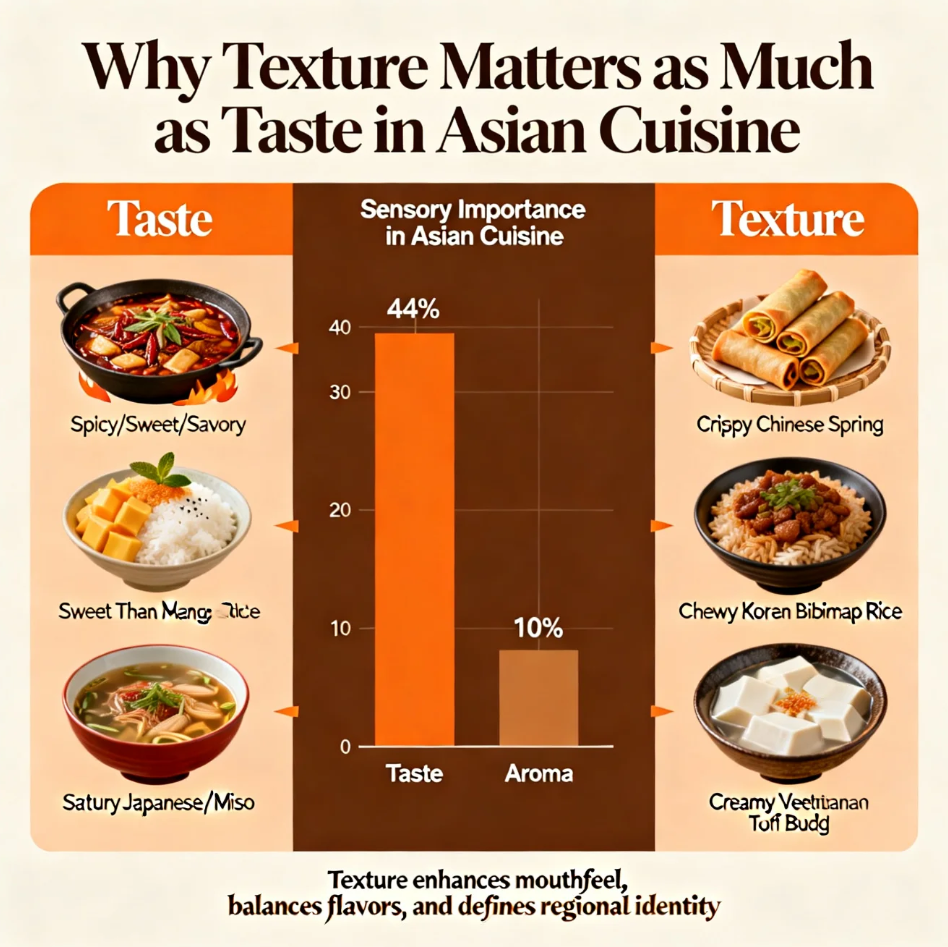

In many food cultures, taste dominates the conversation. In Asian cuisine, however, texture is equally essential. A dish is not judged solely by how it tastes, but by how it feels—how it crunches, stretches, melts, or snaps with every bite.
To understand Asian food, you must understand why texture in Asian cuisine is treated as a core element, not a supporting detail.
Texture as a Fundamental Flavor Dimension
Across Asia, texture is considered part of flavor itself. A dish that tastes good but feels wrong is often seen as incomplete.
Textures commonly valued include:
- Crispy
- Chewy
- Silky
- Springy
- Tender
- Crunchy
These sensations create contrast and rhythm, turning eating into a multisensory experience.
Balance Beyond Sweet, Salty, and Spicy
Asian culinary philosophy often emphasizes balance—not only in taste, but in mouthfeel.
A well-constructed dish may combine:
- Soft rice with crunchy pickles
- Slippery noodles with crisp toppings
- Tender meat with chewy vegetables
This balance prevents monotony and keeps each bite engaging from start to finish.
Cultural Roots of Texture Appreciation
The importance of texture in Asian cuisine is deeply cultural.
Historically:
- Ingredients were used whole and minimally processed
- Cooking methods preserved natural mouthfeel
- Texture signaled freshness and quality
In many regions, the sound of crunching or the resistance of a bite is a sign that food is properly prepared.
Signature Textures Across Asian Cuisines
East Asia: Chew and Spring
Foods like mochi, hand-pulled noodles, and fish balls emphasize elasticity and chewiness—textures associated with skill and craftsmanship.
Southeast Asia: Crunch and Contrast
Dishes often mix fresh herbs, fried elements, and sauces to create layered textures in a single plate.
South Asia: Crisp Meets Soft
Flatbreads, fried snacks, and curries balance crisp exteriors with soft interiors for textural harmony.
Texture as Emotional Experience
Texture doesn’t just affect taste—it affects emotion.
Crispy foods can feel satisfying and indulgent.
Soft, silky textures often feel comforting.
Chewy foods encourage slower eating and mindfulness.
These emotional responses help explain why certain dishes feel nostalgic or deeply satisfying beyond their flavor profiles.
Cooking Techniques Designed for Texture
Many Asian cooking techniques are specifically chosen to control texture:
- Stir-frying for crisp-tender balance
- Steaming for softness and moisture
- Fermentation for complexity and bite
- Frying for contrast and crunch
Technique is not just about cooking—it’s about sculpting mouthfeel.
Why Texture Is Often Missed in Western Interpretation
When Asian dishes are adapted elsewhere, texture is sometimes sacrificed for convenience or familiarity.
This can result in:
- Over-softened noodles
- Lost crunch in garnishes
- Simplified ingredient lists
Without texture, dishes lose part of their identity—even if the seasoning is accurate.
Texture and Respect for Ingredients
Valuing texture also reflects respect for ingredients.
Using each ingredient in a way that highlights its natural feel shows:
- Culinary intention
- Ingredient knowledge
- Cultural authenticity
In Asian cuisine, how food feels is a sign of care.
Final Thoughts: Texture Completes the Taste
Taste may draw you in, but texture keeps you engaged. In Asian cuisine, the most memorable dishes succeed not because they are flavorful alone, but because they feel right.
Understanding texture is key to understanding the soul of Asian food.
When taste and texture work together, eating becomes more than consumption—it becomes experience.