
Every corner of Asia carries its own culinary heartbeat — and at its center lies the art of seasoning. From the aromatic masalas of India to the umami-rich soy sauces of Japan, Asian spices and seasonings are more than ingredients — they’re storytellers.
Each blend tells of geography, history, and cultural identity. Understanding these flavors isn’t just about taste — it’s about appreciating centuries of tradition, trade, and creativity that have shaped how Asia eats today.
Let’s take a journey across the continent — one spice at a time.
🇮🇳 South Asia: Bold Aromas and Complex Layers
South Asia, particularly India, Sri Lanka, and Bangladesh, is home to some of the most iconic spice traditions in the world.
- Cumin, coriander, and turmeric form the holy trinity of many curry bases.
- Garam masala, a warm, fragrant blend, varies by region and even by family.
- Cardamom and cloves add a floral sweetness to both savory dishes and desserts.
These spices don’t just enhance food — they reflect Ayurveda’s belief in food as medicine. Each spice offers balance: cooling, warming, detoxifying, or energizing the body.
Pro Tip: Toasting whole spices before grinding unlocks oils that intensify aroma and depth.
🇹🇭 Southeast Asia: Spice Meets Freshness
Travel further east, and you’ll meet a dance between heat, sweetness, acidity, and herbs. Thai, Vietnamese, and Indonesian cuisines thrive on contrast and balance.
- Lemongrass, galangal, and kaffir lime leaves bring brightness and citrus.
- Chilies and fish sauce add heat and depth.
- Palm sugar and tamarind create that irresistible sweet-sour harmony.
In Thailand’s green curry, for example, every ingredient has a role: spice excites, herbs refresh, and coconut milk smooths everything into harmony.
Pro Tip: When using fish sauce, think of it as salt — a few drops can unlock layers of flavor in any dish.
🇨🇳 East Asia: Subtle Complexity and Balance
In China, Japan, and Korea, seasoning is about balance and precision rather than intensity.
- Soy sauce (light, dark, or sweetened) forms the backbone of flavor.
- Ginger and garlic create aromatic warmth in countless stir-fries.
- Five-spice powder (star anise, cloves, Chinese cinnamon, Sichuan peppercorn, fennel) gives dishes like roast duck their signature flavor.
In Japan, subtlety reigns. Miso, mirin, and dashi create delicate layers of umami, while wasabi and pickled ginger refresh the palate.
Meanwhile, Korea’s gochujang — a fermented chili paste — brings deep, lingering heat to everything from stews to BBQ marinades.
Pro Tip: Umami is the key here — think fermented, slow-aged, and naturally salty ingredients.
🇮🇩 The Indonesian Archipelago: Islands of Spice and History
Indonesia’s spice legacy is legendary — it was once the global hub of the Spice Trade, attracting explorers from across the world.
- Nutmeg, mace, and cloves originate from the Maluku Islands (once called the Spice Islands).
- Candlenuts, shallots, and turmeric shape rich spice pastes used in sambal and rendang.
- Coconut milk and tamarind add creamy and tangy undertones to balance bold spices.
From Java’s sweet soy “kecap manis” to Bali’s sambal matah, Indonesia’s flavors are as diverse as its 17,000 islands.
Pro Tip: For authentic rendang, slow-cook your spice paste until the oils separate — that’s when flavor truly blooms.
🇵🇭 The Philippines: Fusion of East and West
Filipino cuisine blends indigenous techniques with centuries of global influence — Spanish, Chinese, and American among them.
- Vinegar and soy sauce anchor dishes like adobo, giving them a tangy, savory punch.
- Annatto seeds lend color and mild sweetness.
- Garlic and bay leaves are everyday essentials that build deep, homey flavor.
Filipino seasoning is about simplicity with soul — proving that even minimal ingredients can tell powerful flavor stories.
🧂 How to Build Your Own Asian-Inspired Spice Collection
Want to bring Asian flavors home? Start small but thoughtful:
- Stock 10 essentials — turmeric, chili, cumin, soy sauce, ginger, garlic, lemongrass, coriander, sesame oil, and tamarind.
- Buy whole spices and grind fresh when possible.
- Use neutral oils like peanut or rice bran to highlight aromatics.
- Store in airtight containers away from heat and light.
With just a few staples, you can cook your way through entire cuisines — from Indonesian satay to Korean kimchi stew.
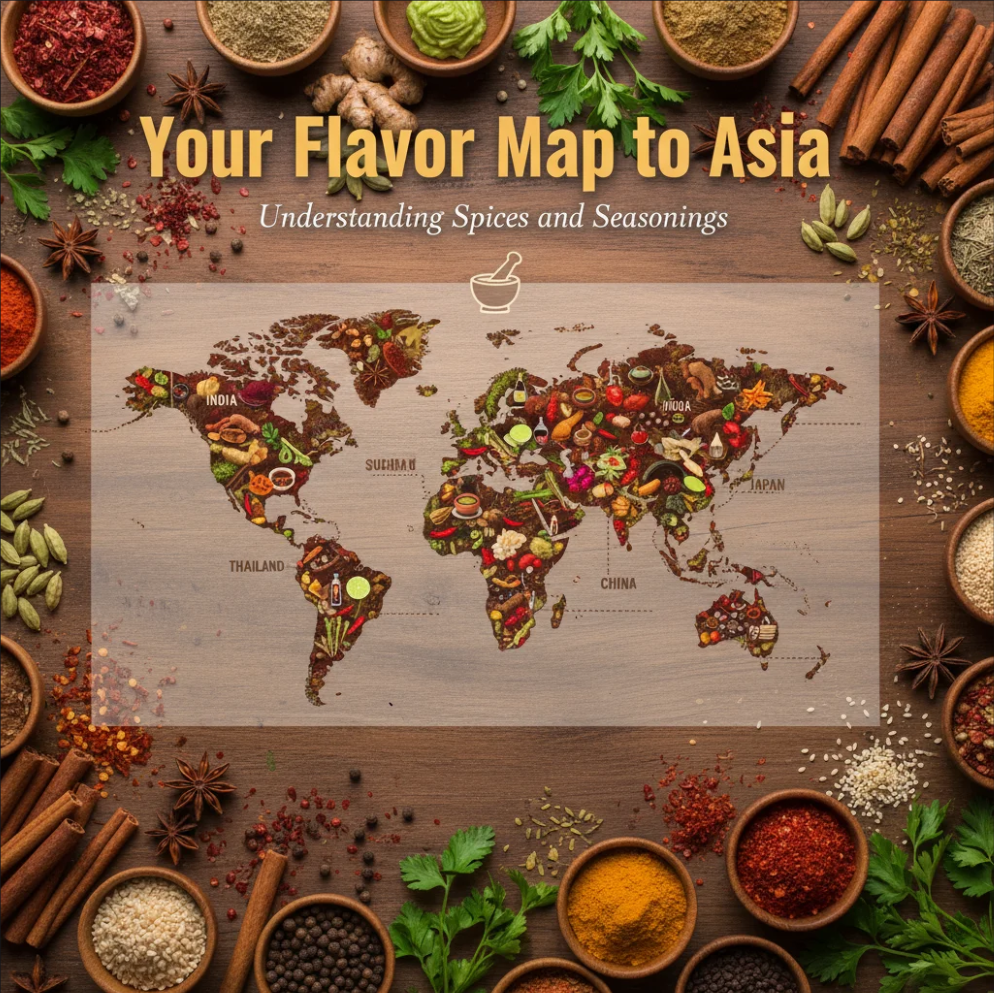
🍜 Conclusion: The Map That Connects Cultures
Asia’s spices and seasonings are more than ingredients — they’re the essence of its shared identity.
Every pinch of cumin, drizzle of soy, or dash of chili carries centuries of history, migration, and innovation.
Understanding them means appreciating the continent’s diversity — and realizing that behind every flavor lies a story waiting to be savored.